Heat-Insulating PVB Laminated Glass: The Ideal Solution for Daylighting and Energy Efficiency
TIME: 2025-12-02 READ: 809 AUTHOR:
In recent years, building energy efficiency retrofits have become a major focus in the construction industry. From window film and coating upgrades on existing façades to advanced curtain wall renovations, more projects are adopting innovative technologies to improve indoor thermal comfort and reduce energy consumption.

1. Balancing Daylighting and Solar Heat Gain
A common challenge in commercial building projects is that even with Low-E insulated laminated glass, skylights often require blinds or shades to reduce solar heat gain. Over time, these shading systems may suffer from fabric yellowing, motor failures, and other maintenance issues, affecting both aesthetics and operational costs.
Switching to colored or tinted glass introduces a new dilemma:
· Large tinted areas improve heat insulation but reduce daylighting.
· Small tinted areas allow sufficient daylight but fail to block solar heat effectively.
Solution: Heat-insulating PVB laminated glass balances daylighting, solar heat reduction, durability, and cost-effectiveness.

2. How Heat-Insulating PVB Laminated Glass Works
Heat-insulating laminated glass is based on traditional PVB laminated glass, but it incorporates nano-scale heat-insulating materials directly into the PVB interlayer. These materials are uniformly dispersed and formed into a single heat-insulating PVB sheet, which is then laminated between glass panes.
Key benefits:
· Blocks ultraviolet (UV) and near-infrared (NIR) radiation
· Significantly reduces solar heat gain
· Maintains the same glass structure as standard laminated glass
3. Proven Performance: Up to 50% Reduction in Solar Heat Gain
Testing on commercial skylight projects shows the following results:
Glass TypeSolar Heat Gain Coefficient (SHGC)ReductionStandard PVB laminated glass0.776—Heat-insulating PVB laminated glass0.40248%Heat-insulating PVB laminated glass + Low-E glass0.23670%
Key takeaway: Heat-insulating PVB laminated glass can reduce indoor solar heat gain by nearly half, lowering air conditioning energy consumption and significantly improving thermal comfort.
4. Multi-Functional Advantages Beyond Heat Insulation
· Impact Safety: The PVB interlayer holds glass fragments in place, preventing injury—ideal for curtain walls, skylights, and high-safety areas.
· Sound Insulation: PVB absorbs vibrations, reducing mid- and low-frequency noise; sound reduction can exceed 37dB.
· UV Protection: Blocks over 99% of ultraviolet radiation, protecting furniture, artwork, and interiors.
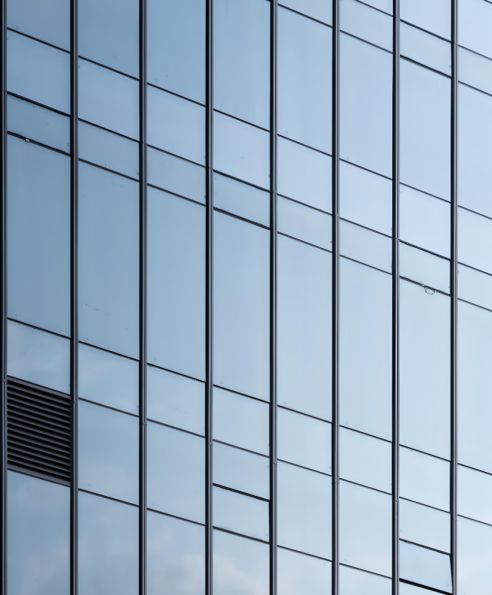
· Aesthetic Flexibility: Maintains high transparency while providing heat insulation, avoids the mirrored effect of coated glass, and supports custom colors and textures
5. Typical Applications
Heat-insulating PVB laminated glass is suitable for areas that require both daylighting and solar heat control, including:
· Curtain walls and façade systems
· Commercial skylights and atriums
· High-end floor-to-ceiling windows and observation elevators
· Sunrooms and landscape pavilions
· Modern agricultural greenhouses and display windows
Benefits:
· Reduces solar heat in large lobbies and glass façades
· Improves indoor comfort
· Mitigates risks of spontaneous glass breakage
· Eliminates the need for blinds on skylights

6. Cost Efficiency and Market Awareness
Although slightly more expensive than standard PVB laminated glass, overall costs are lower than installing additional shading systems, and durability is superior.
Market awareness is still limited; many developers and architects with strong energy-saving requirements have yet to adopt this technology as a mainstream solution.
7. Conclusion: A Future-Proof Solution
Window films, coatings, and curtain upgrades are ideal for retrofitting existing façades. For new construction, heat-insulating PVB laminated glass is emerging as the preferred solution for safety, energy efficiency, and aesthetics.
Key advantages:
· Reduces 30–50% indoor solar heat gain
· Provides impact safety, sound insulation, UV protection
· Offers customizable aesthetics for architectural design
As energy-efficient and sustainable building practices continue to expand, the market potential and adoption of heat-insulating PVB laminated glass will continue to grow.